summer 2025
Future Forward Design is a seasonal feature by Design Dispatch that spotlights emerging designers shaping the future of creativity across disciplines.
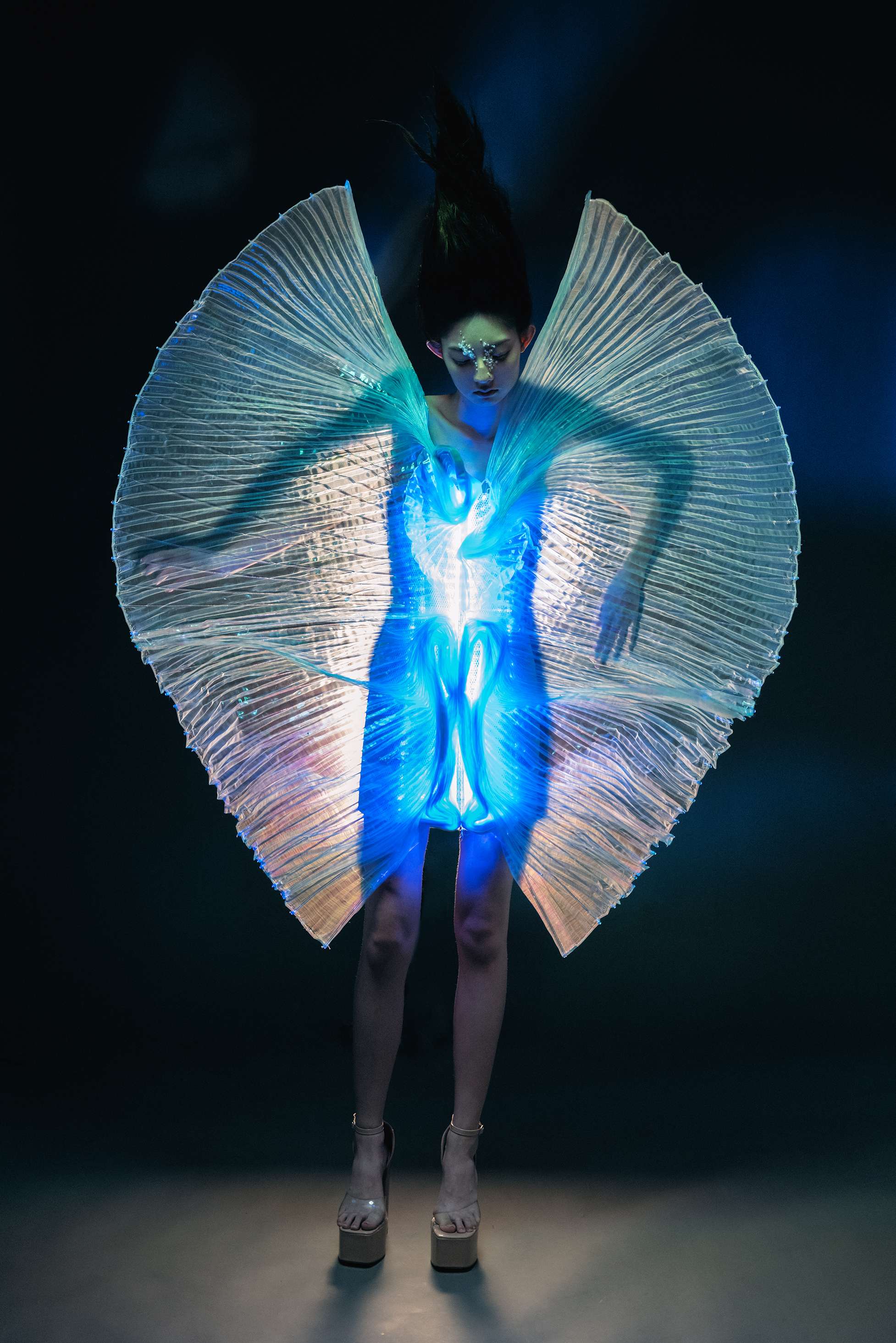
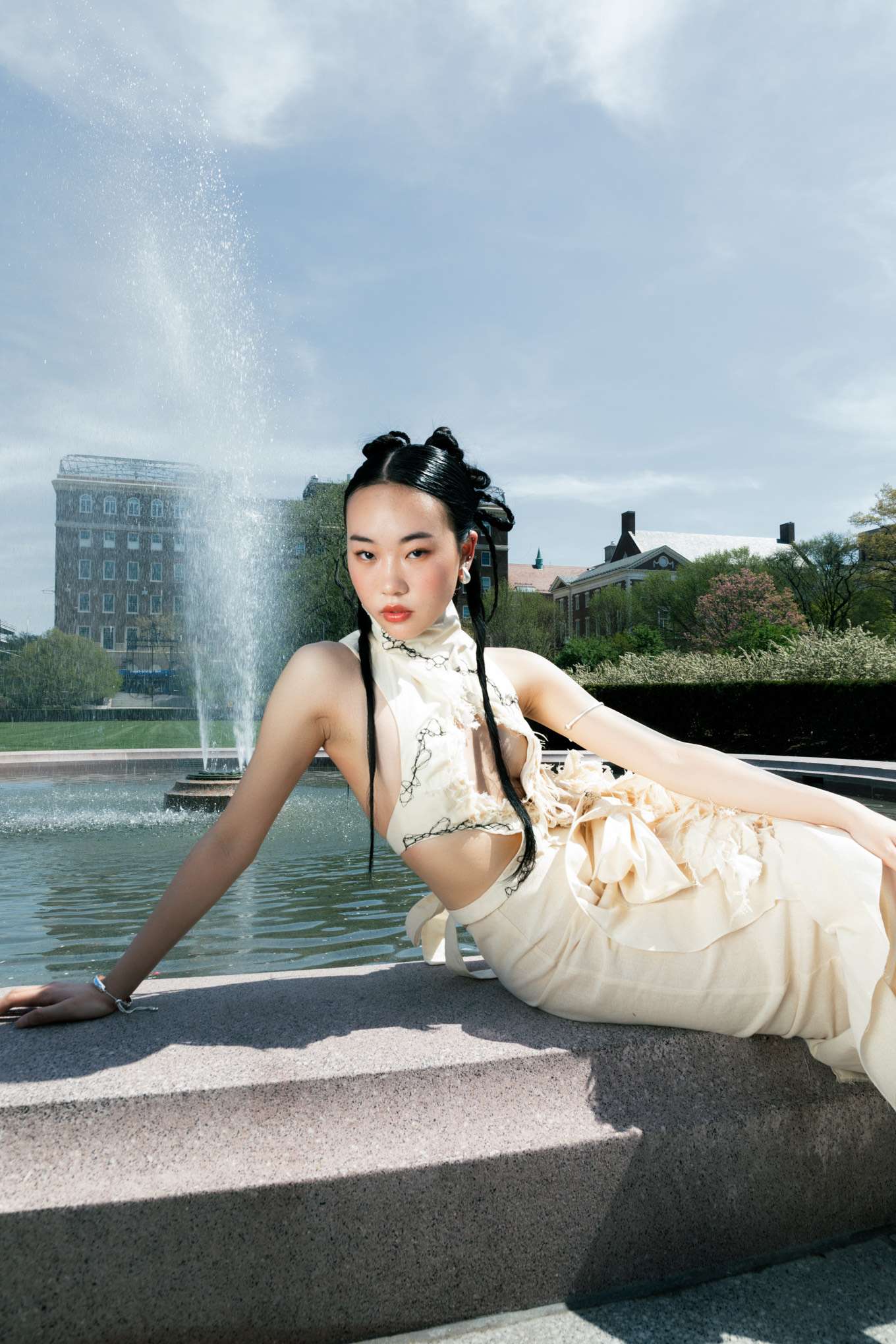
Deep Sea Mutation: A Glimmer in the Dark is inspired by marine life forced to adapt and mutate under the weight of pollution. The design’s radiating pleats evoke fins and butterfly wings, symbolizing transformation and fragile survival in hostile environments. At its core, a glowing blue light recalls bioluminescent organisms, embodying vitality that persists even in darkness. Constructed with sustainable and recycled materials, the piece merges futuristic aesthetics with a commitment to ecological responsibility. It serves both as a warning of environmental crisis and a vision of resilience: even in the deepest abyss shaped by human neglect, light continues to emerge as a symbol of hope and renewal.

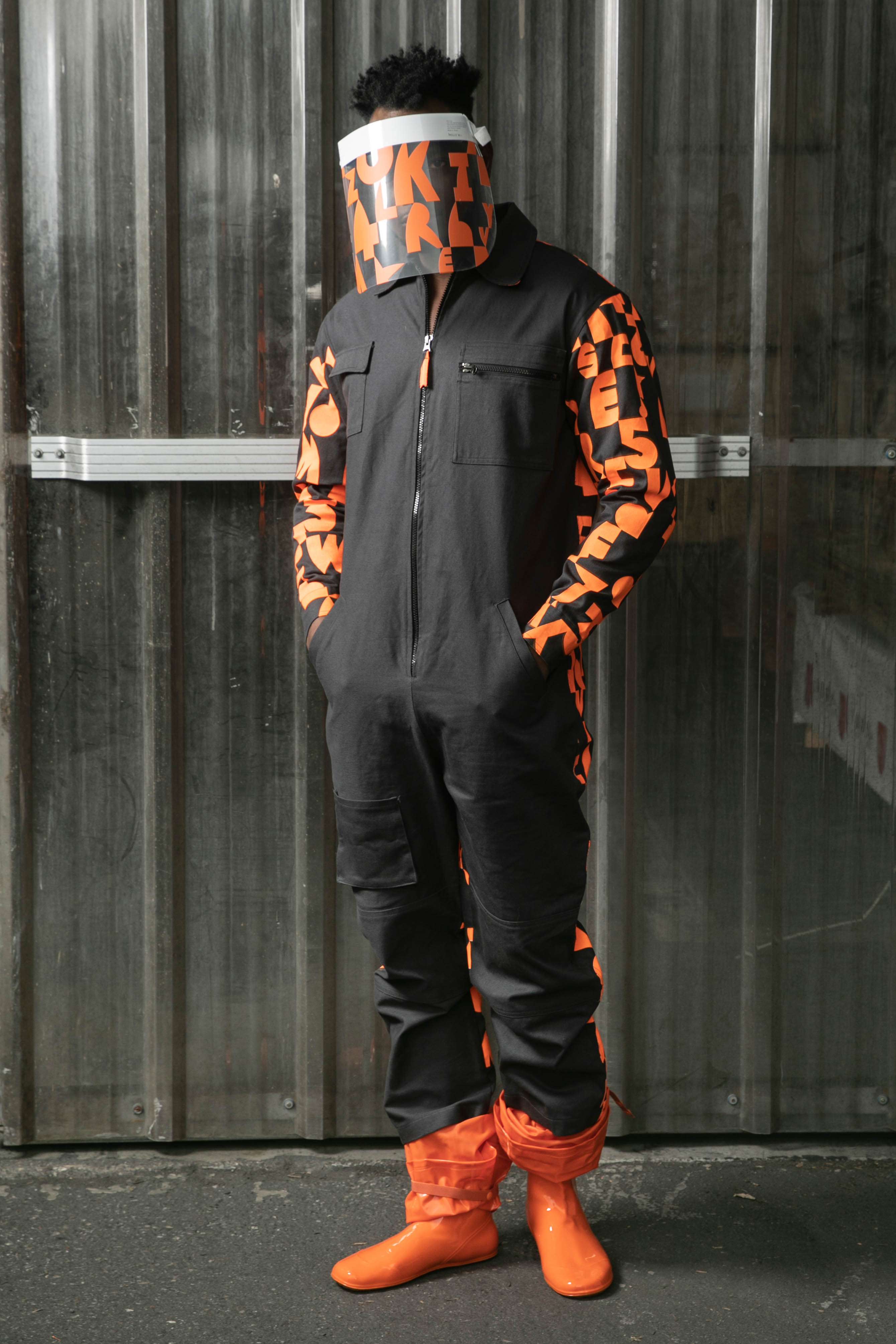
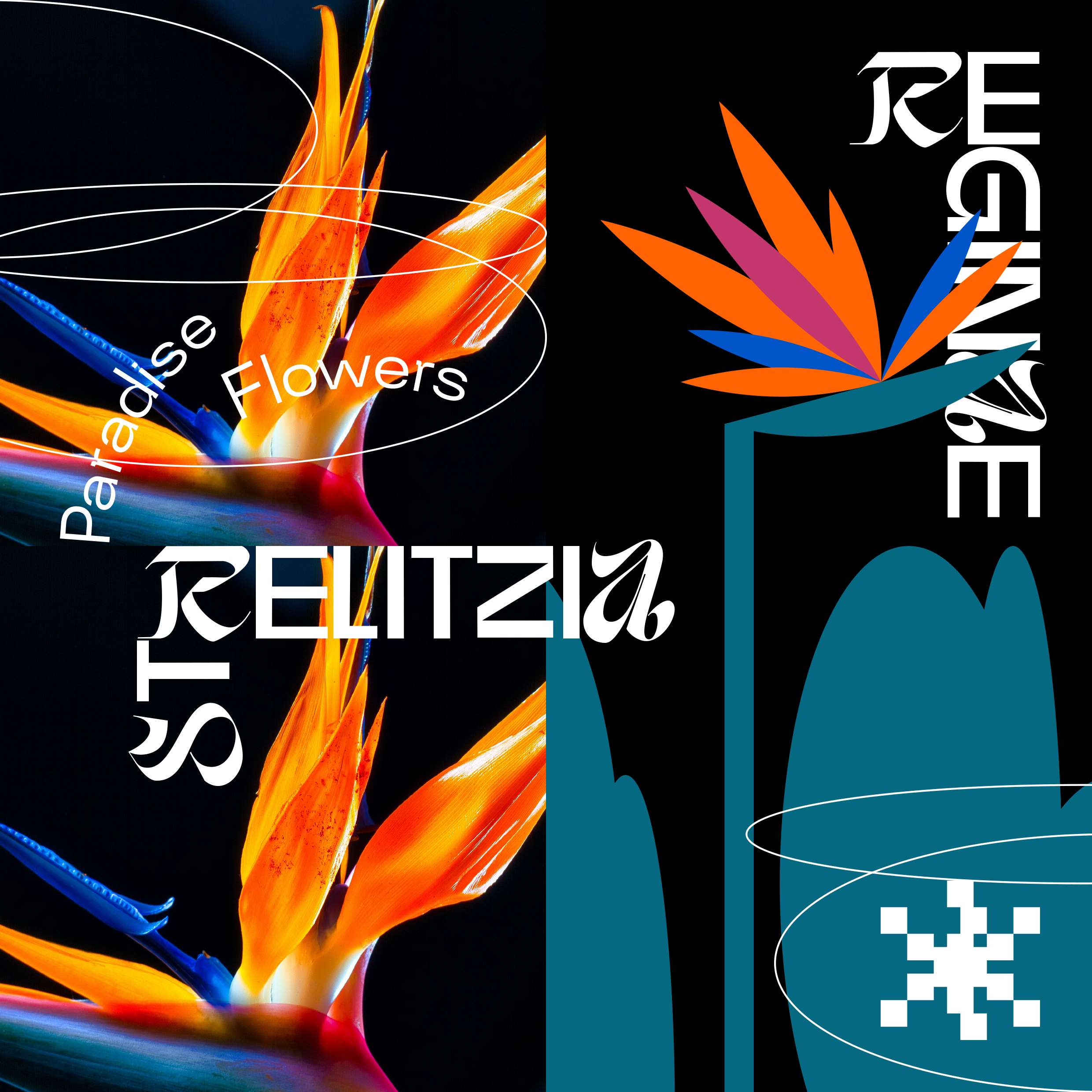
I'm Yedio, a freelance graphic designer from Taiwan. I specialize in creating vibrant and distinctive visuals by blending geometric shapes and bold color blocks. My work often has a fresh, fashionable, and airy feel, as I love to explore new ways of playing with color and form. My passion lies in crafting designs that are unique and full of energy. I aim to consistently challenge the expected, creating fresh visual experiences that truly stand out. While my creative process is rooted in design principles, my personal interests in astrology and tarot help me cultivate a unique perspective on the world. This focus on symbolism and archetypes informs how I view and interpret beauty, bringing a deeper layer to my work. The series I'm submitting, Strelitzia Reginae, is a tribute to my favorite plant, the bird of paradise. I view this magnificent South African native, named after Queen Charlotte, as "the queen of flowers." Its striking elegance and crown-like colors embody the regal beauty that inspires this project. By blending the plant's natural grace with elements of fashion, this collection of visuals aims to capture a sense of both elegance and raw power. I hope you enjoy the work. More of my work: https://www.instagram.com/_yedio_

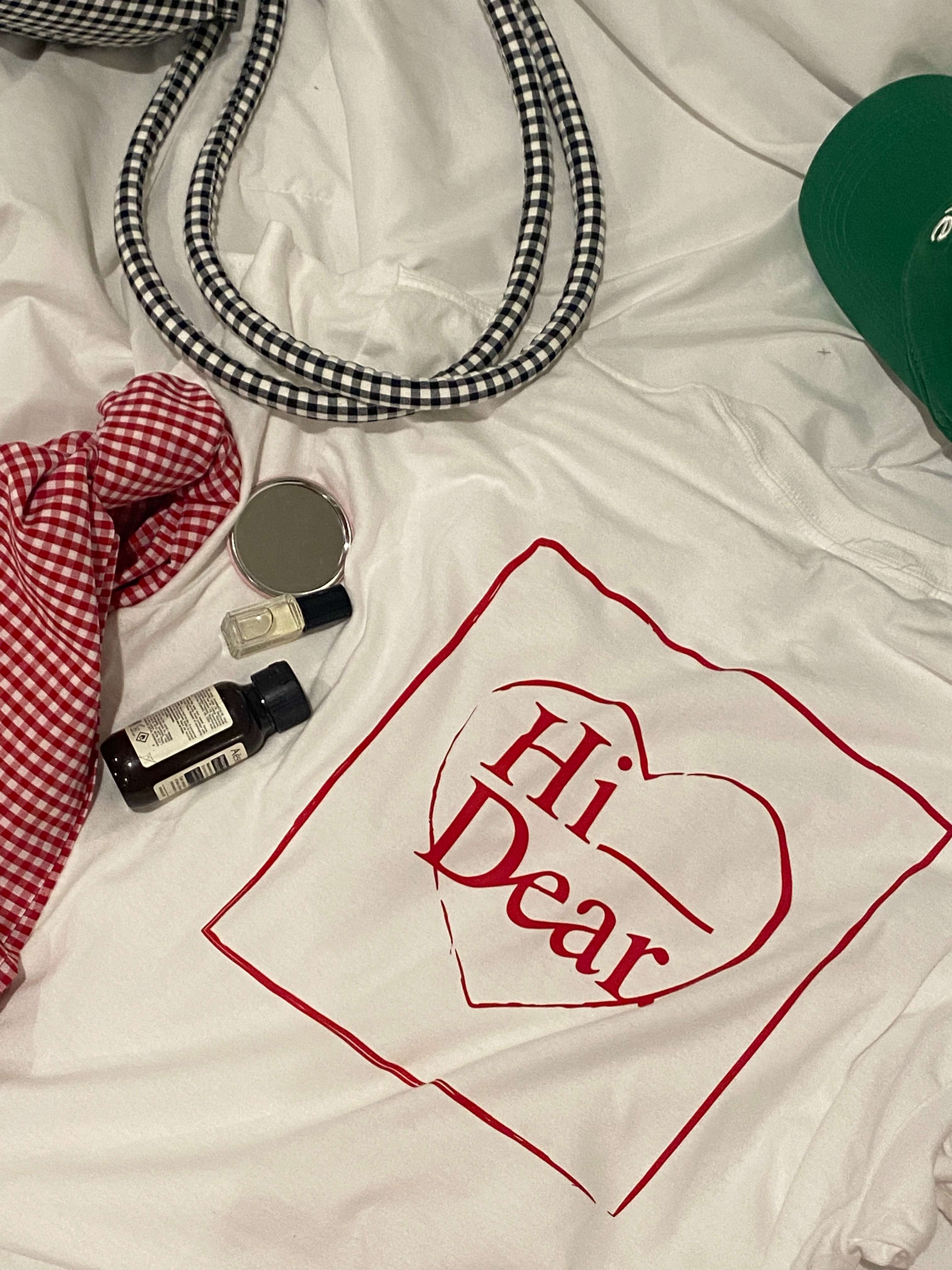
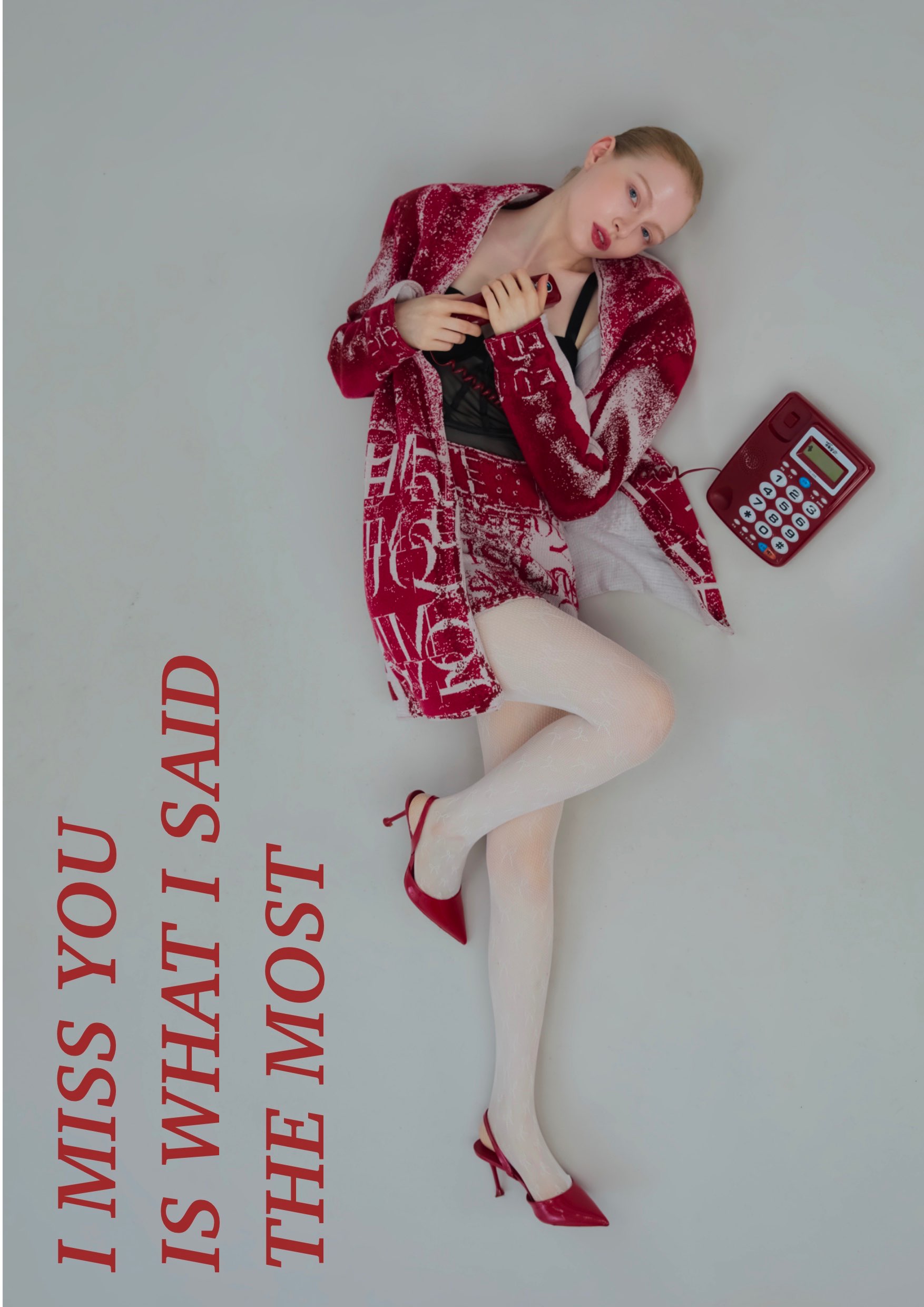
This collection is inspired by the realisation that in a long-distance relationship, we often say "I miss you" more than "I love you" — a phrase that reflects an unreachable longing and yearning, trapped behind a phone screen, reduced to cold yet honest text and images. Using jacquard knitting techniques, I wove images of clothing directly into the fabric, creating an illusion where the virtual and the real blur — like seeing someone through a screen: clearly there, yet untouchable. This "flat illusion" symbolises both the authenticity and limitations of digital emotion. The lace patchwork incorporated into the series represents the romance and tenderness that still exist within relationships — a longing for genuine connection, even when wrapped in rationality and technology. The overall design responds to how people today rely on mobile phones to maintain relationships, while also attempting to transform those compressed, delayed, and distorted emotions into wearable pieces with warmth. This is an experiment in expressing emotion through knitting — a question and a gaze directed at love in the digital age.

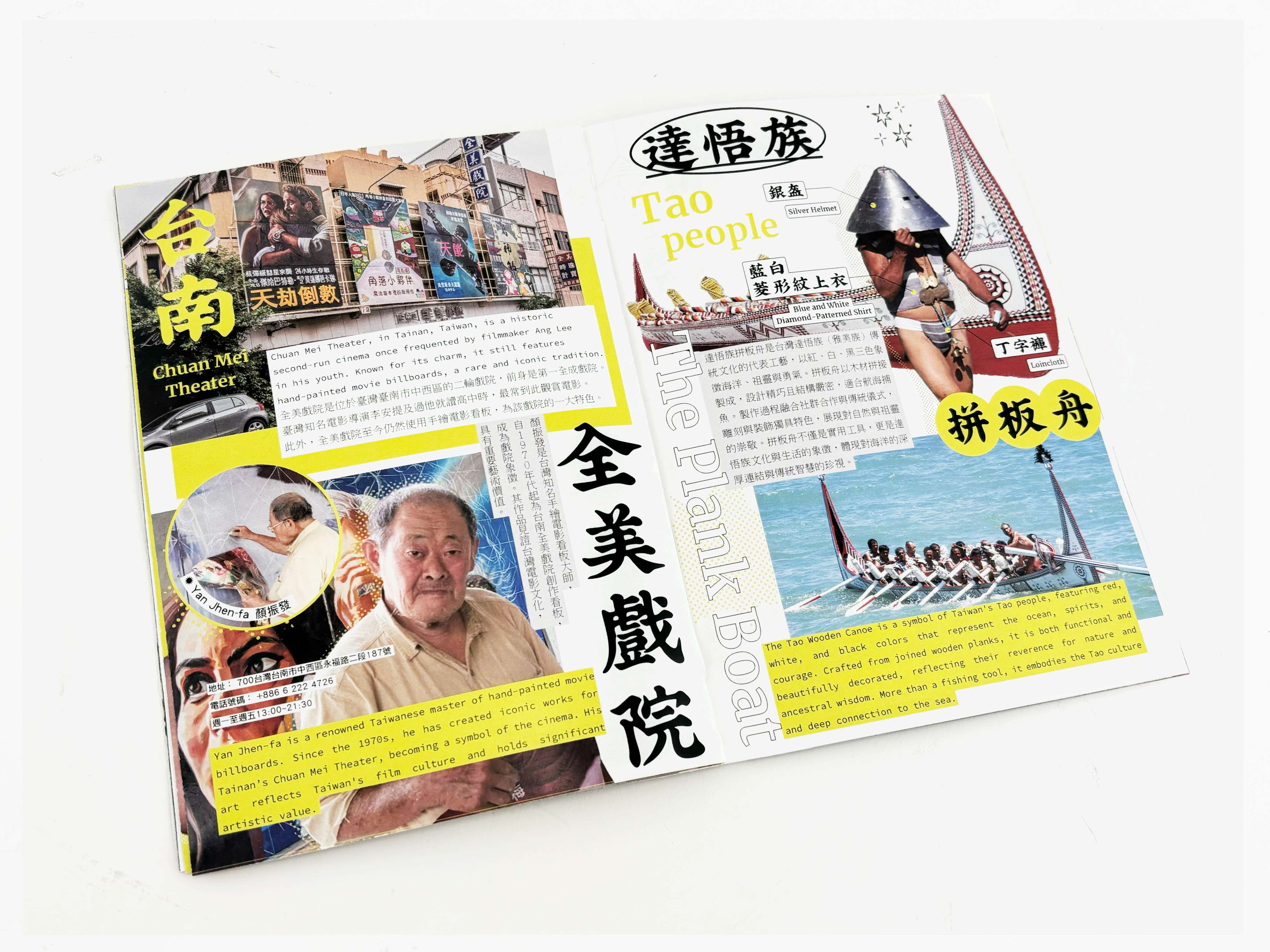
Things from Taiwan is a bilingual zine that delves into Taiwan’s cultural identity through the lens of everyday objects, iconic street foods, and clean visual storytelling. Presented in both English and Chinese, it invites readers to experience a more intimate side of Taiwan—nostalgic, vibrant, and deeply rooted in daily life. Instead of focusing on typical tourist attractions, the zine highlights the details locals know by heart: plastic stools scattered around food stalls, a humming Tatung rice cooker in the kitchen, and the unmistakable scent of stinky tofu drifting from a night market. These scenes are translated into a graphic language that is minimalist yet full of warmth. Each spread features clean, thoughtful layouts that celebrate form without sacrificing character. Dual-language typography is used not just for accessibility, but as an aesthetic element—balancing space and rhythm across the page. Visual icons such as braised pork rice , bubble milk tea, and stinky tofu serve as cultural anchors, connecting readers to emotional memories through design. These aren’t just foods—they are symbols of home and belonging. Things from Taiwan is both a personal tribute and a design exercise in cultural storytelling. It captures the spirit of a place through careful curation, typographic sensitivity, and a quiet sense of play. Whether you’re returning home or exploring for the first time, this zine offers a warm, visually engaging introduction to the textures of Taiwanese life.

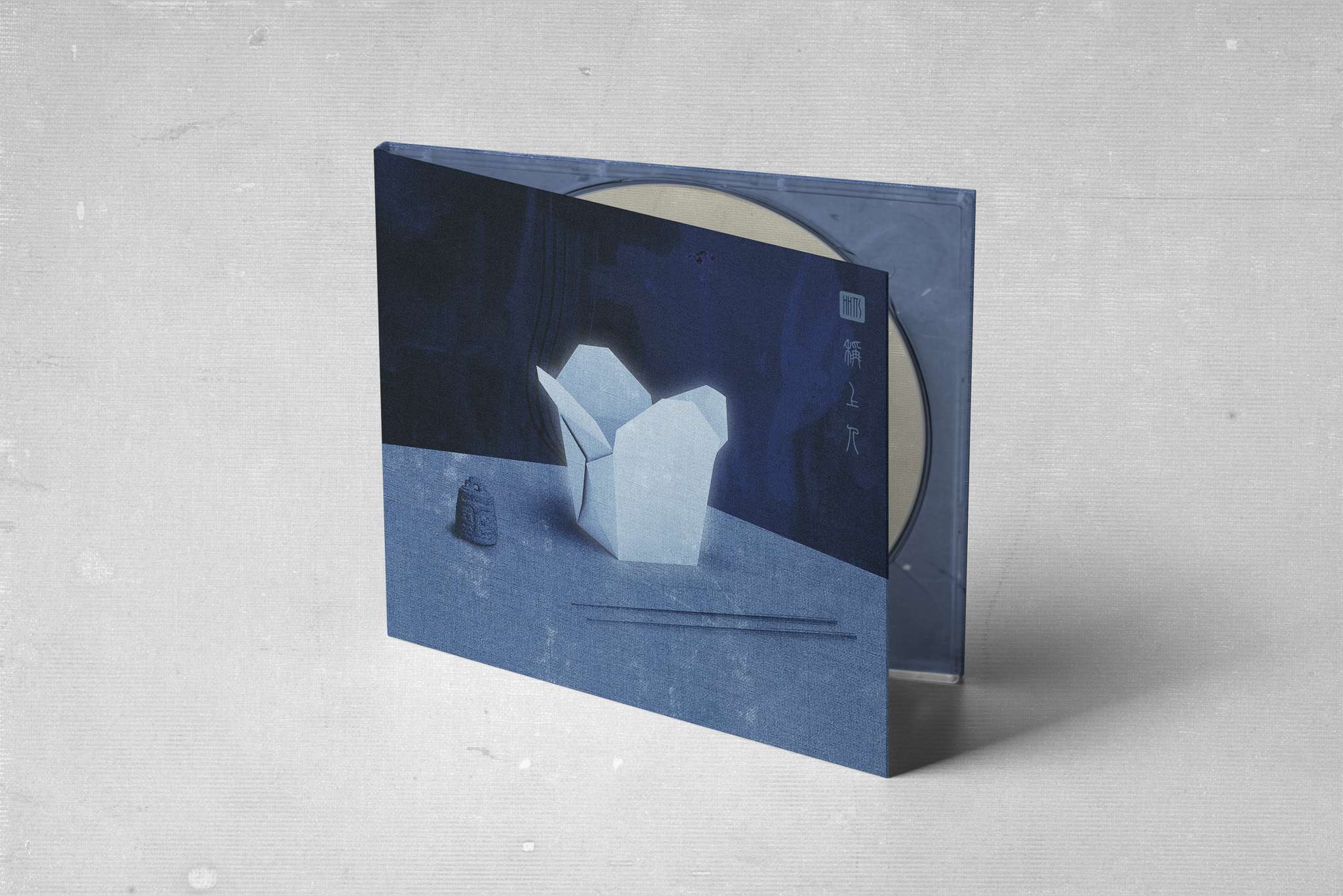
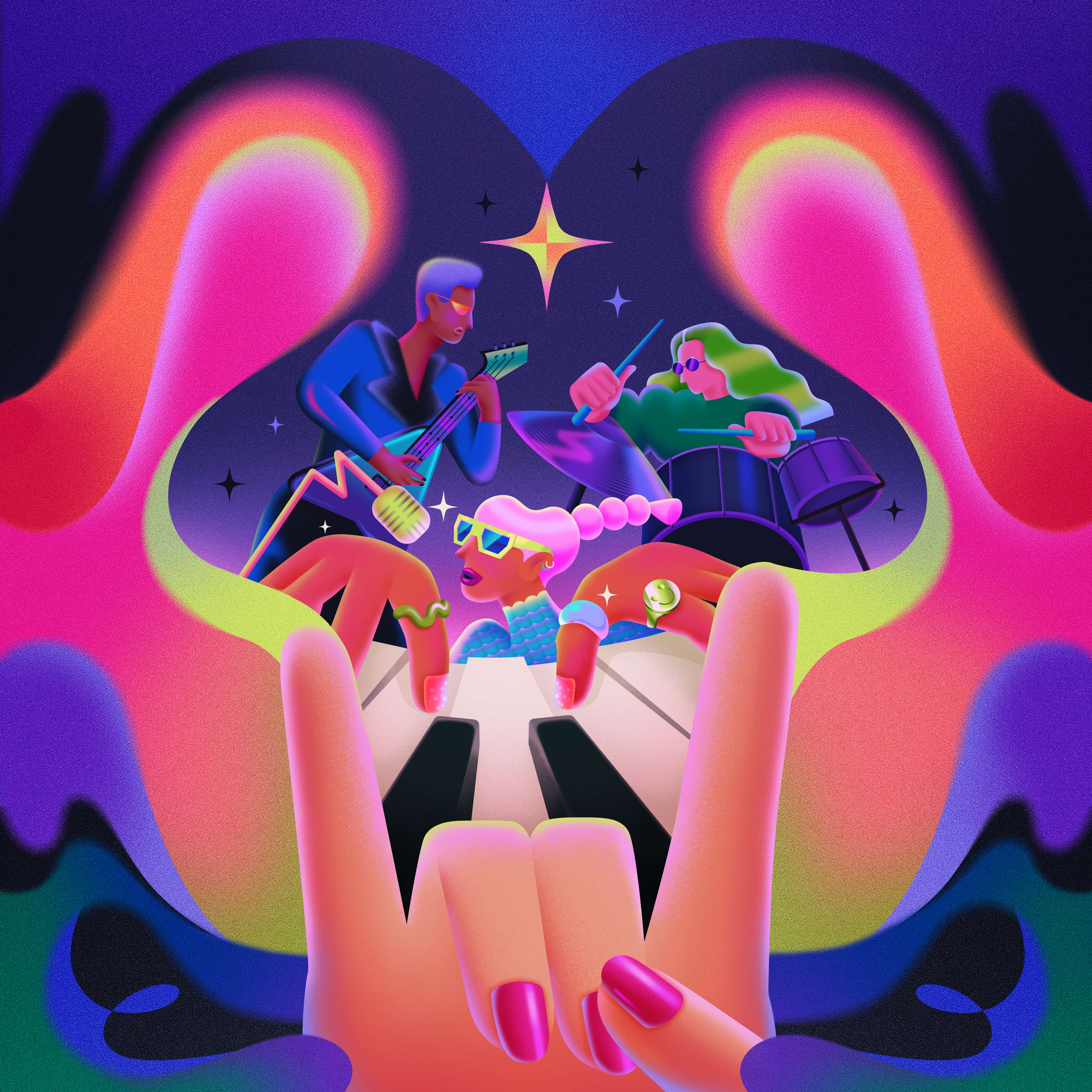
This project presents the visual identity design for Hang Him to the Scales, a New York–based band blending shoegaze, dream pop, and alternative rock with elements of Chinese folk tradition. The design challenge was not only to create a logo or a poster, but to establish a unified system spanning album artwork, concert posters, stage visuals, and live VJ performances, ensuring that every visual encounter resonates with the same aesthetic language. The band itself has emerged as a distinctive new voice in the Asian diaspora music scene, with performances at the National Cherry Blossom Festival in Washington D.C., the International Festival of Arts & Ideas, and key New York venues. Their work has been supported by a NYSCA Arts Grant and profiled in People’s Daily Overseas and RADII, underscoring their growing cultural impact. The identity draws inspiration from seal script typography, indigo dyeing, and the atmospheric textures of shoegaze. Through this synthesis, the visuals echo the band’s sound, layered, melancholic, and immersive, while building a consistent and recognizable presence across media.
Future Forward Design is a seasonal feature by Design Dispatch that spotlights emerging designers shaping the future of creativity across disciplines.
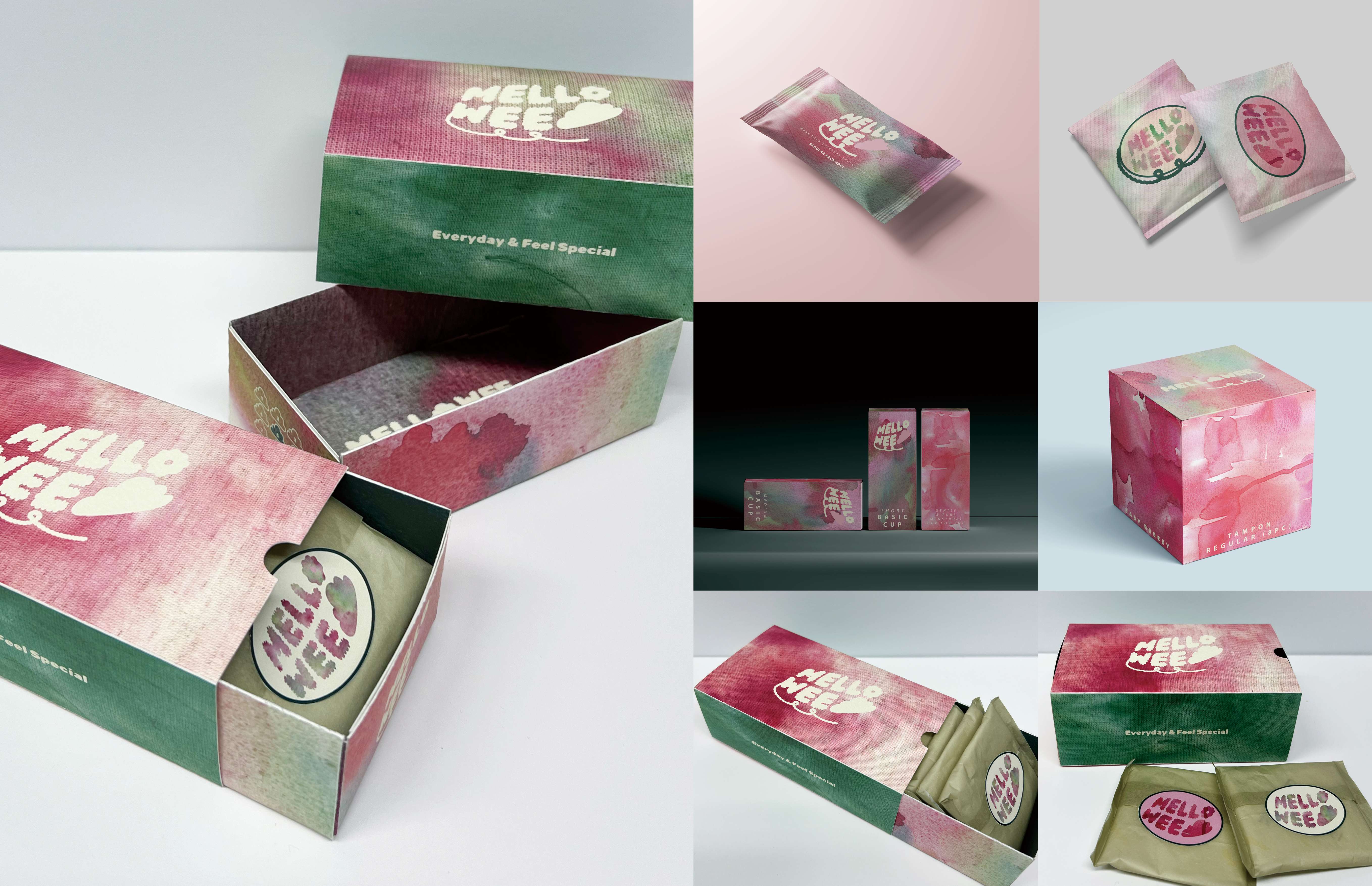
Mellowee is a conceptual menstrual care subscription brand designed to make an essential product feel personal, soft, and natural. At the heart of the project is customization: customers can set their own delivery cycle to match their menstrual rhythm and build a package that reflects their needs. Depending on flow, length, or personal preference, users can choose different sizes and quantities of pads, creating a subscription that feels both practical and uniquely their own. The brand name combines Mellow—symbolizing softness and calm—with Wee, where We represents togetherness and the added e stands for the consumer. This reflects Mellowee’s vision of a brand built alongside its users, positioning menstrual care as a natural, supportive part of daily life. The brand’s core values are Customization, Softness, and Sustainability. These are expressed not only through the service but also the design. Products are framed as natural, everyday essentials, and packaging highlights both emotional warmth and environmental awareness. Visual identity reinforces this philosophy through pastel tones of baby pink, deep green, pastel yellow, and magenta pink. Watercolor-inspired textures convey fluidity and softness, while rounded, cloud-like typography adds a friendly and approachable touch. The packaging system emphasizes ease and delight, making the unboxing moment feel special rather than routine. With the tagline “Everyday & Feel Special,” Mellowee challenges the idea that menstrual care must be clinical or impersonal. Instead, it reimagines it as a personalized, thoughtful experience that values comfort, inclusivity, and emotional well-being.

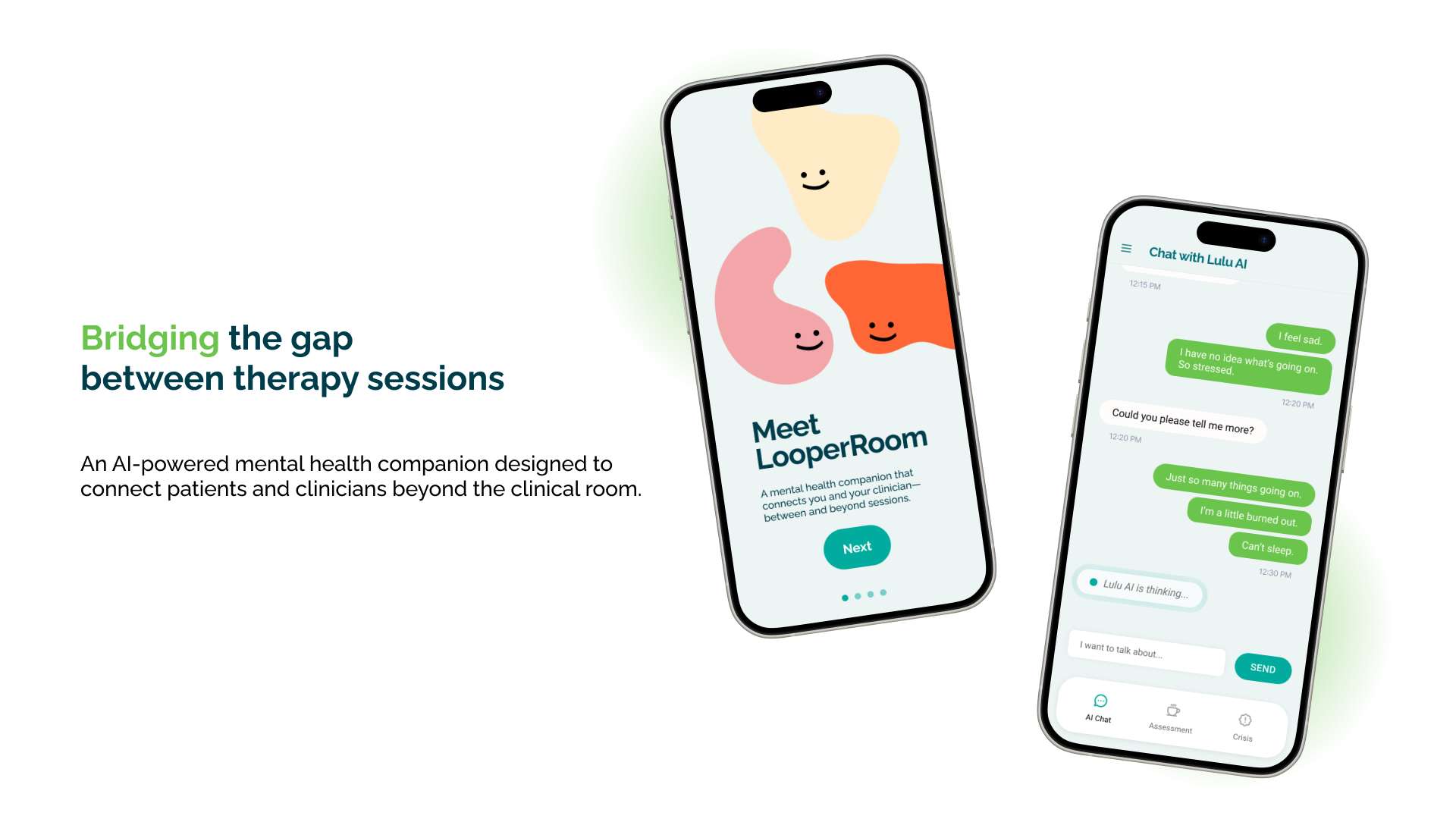
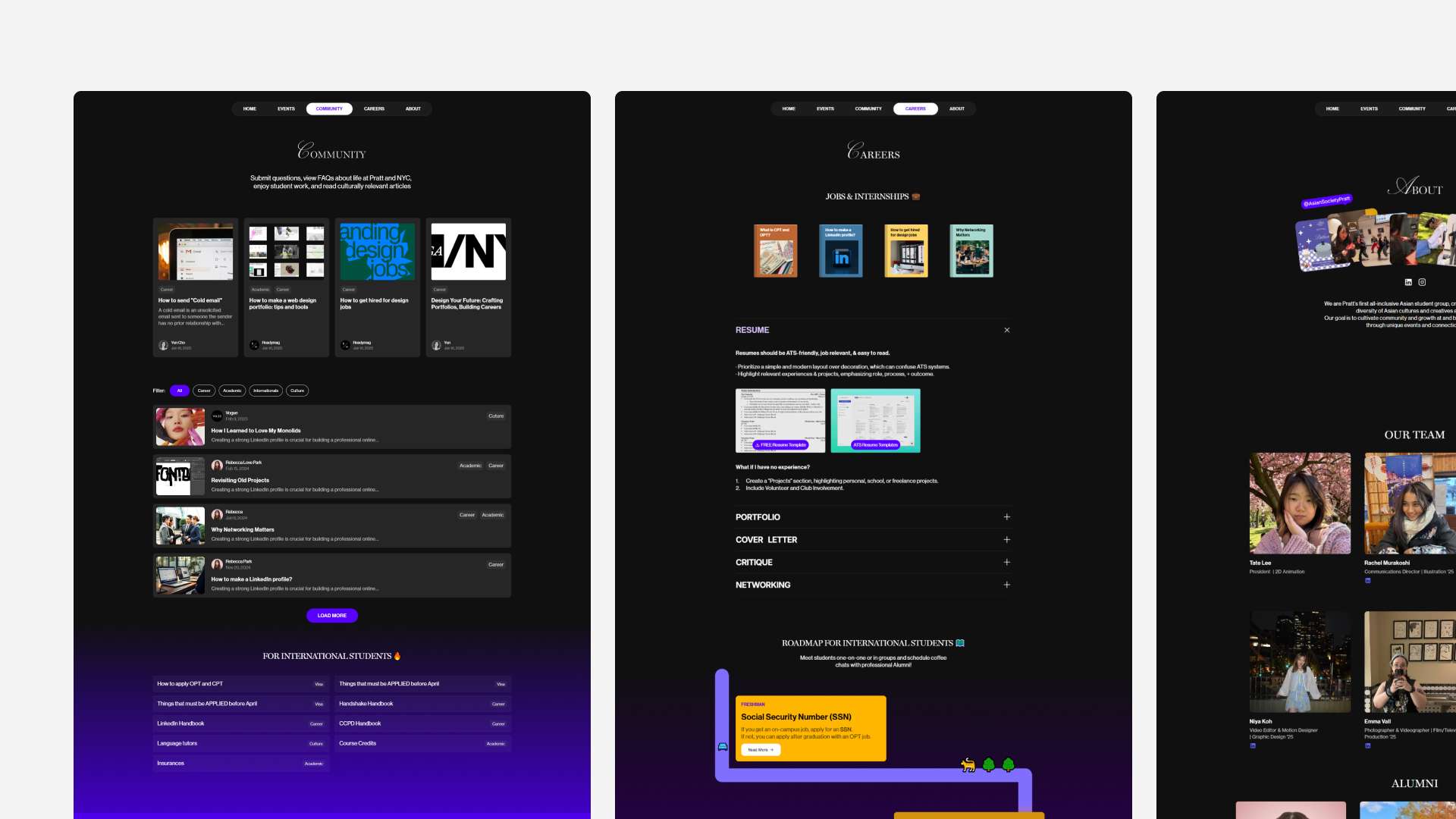
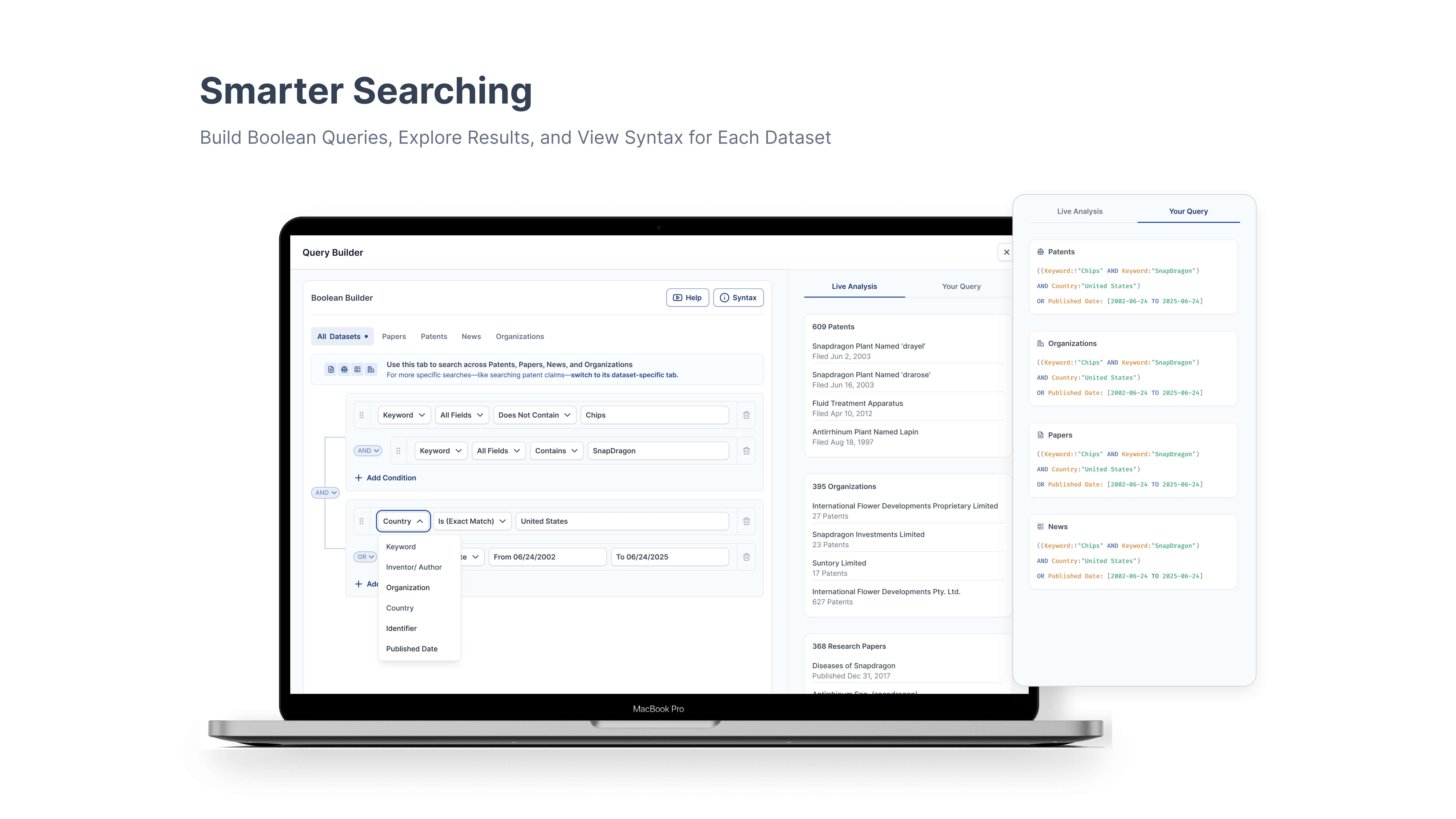
LooperRoom App is an AI-powered mental health support platform designed to bridge the gap between therapy sessions. Created for both patients and clinicians, it combines friendly chatbot interactions with clinician-facing dashboards to reduce patient dropout and strengthen continuity of care. I led the end-to-end product design—from user flows and questionnaire logic to interface systems and enterprise-level clinician tools. My work included designing conditional form logic based on patient age, setting up modular components for responsive UI, and crafting a tone that balances trustworthiness with approachability. I also collaborated closely with PMs and engineers to ensure clinical accuracy and data compliance. LooperRoom is not a virtual therapist, but a connective system—keeping patients engaged, informed, and emotionally supported between sessions. As a designer, I focused on creating an ecosystem that empowers both sides of care: patients and providers. The result is a product that is scalable, accessible, and deeply human-centered.