
2026-09-19
Emma Fitzgerald
Design Dispatch, New York

Most artists arrive at their specialism sideways. Few plan, let alone anticipate, finding their footing on the first step. For Stephen Mok, that point was even less obvious. Coming from a fine arts background, Mok developed an appreciation for drawing and composition before he ever touched a 3D application. That changed when he pursued a BFA in Interactive Media & Game Development, paired with a Motion Media Design minor, at the Savannah College of Art and Design — the first step on a path that would carry him deep into 3D and, eventually, into the world of global product advertising.
Mok graduated during the pandemic, into an industry reshuffling itself in real time. A two-month mentorship not long after graduation ignited a love for hard-surface modelling, and his first job out of undergrad soon followed at Meptik, a studio now folded into Disguise, one of the entertainment industry's leading virtual production companies. Working with familiar technology outside of its usual context, Mok realised that the 3D skills he'd developed could be used well beyond video games. After a year, he returned to SCAD to pursue an MA in Visual Effects, intent on expanding his skillset and further refining his craft in photorealism.
The pivot paid off almost immediately. Fresh out of graduate school, Mok began picking up motion graphics work in a niche most people never think about: footwear. It started small — a single assignment for Skechers — led to another, and kept growing from there. Within months, Mok had earned a place on the production team behind the brand's Super Bowl LVIII commercial starring Mr. T, watched by roughly 123 million people. That run of footwear work is where he sharpened his eye for photorealism: the knack for turning a physical product into a digital one that holds up under advertising's closest scrutiny.

A still from Skechers’ Super Bowl LVIII commercial featuring Mr. T.
That specialism became the foundation for something bigger. Mok now does most of his work through The Mokintosh, the studio banner that lets him take on a far wider range of clients than any single footwear account could offer alone — carrying him from digital footwear into full-scale product visualisation for some of the biggest names in retail and fashion.
Mok’s portfolio steadily grew. He worked with Cerebelly, an organic baby food brand, producing a wide range of product renders across its full line of smoothies, bars, and broths. From there, he turned to Callaway Golf, helping create a CG trailer for their Coronado V4 footwear line. He later joined Lululemon Athletica's footwear design team — his first time working on the design side of a product rather than just advertising.

A screengrab of the latest products from Cerebelly, an organic baby food company.

A still from a video made to showcase Callaway Golf’s Coronado V4.
In 2026, Mok worked as a 3D generalist on a campaign for Nike's new Ava footwear line, contributing to one of the collection's two hero shoes. That work led to a second project soon after: a CGI campaign for Moncler's Fragment collaboration with designer Hiroshi Fujiwara. Two of the biggest names in footwear and fashion, back to back, in the same year.
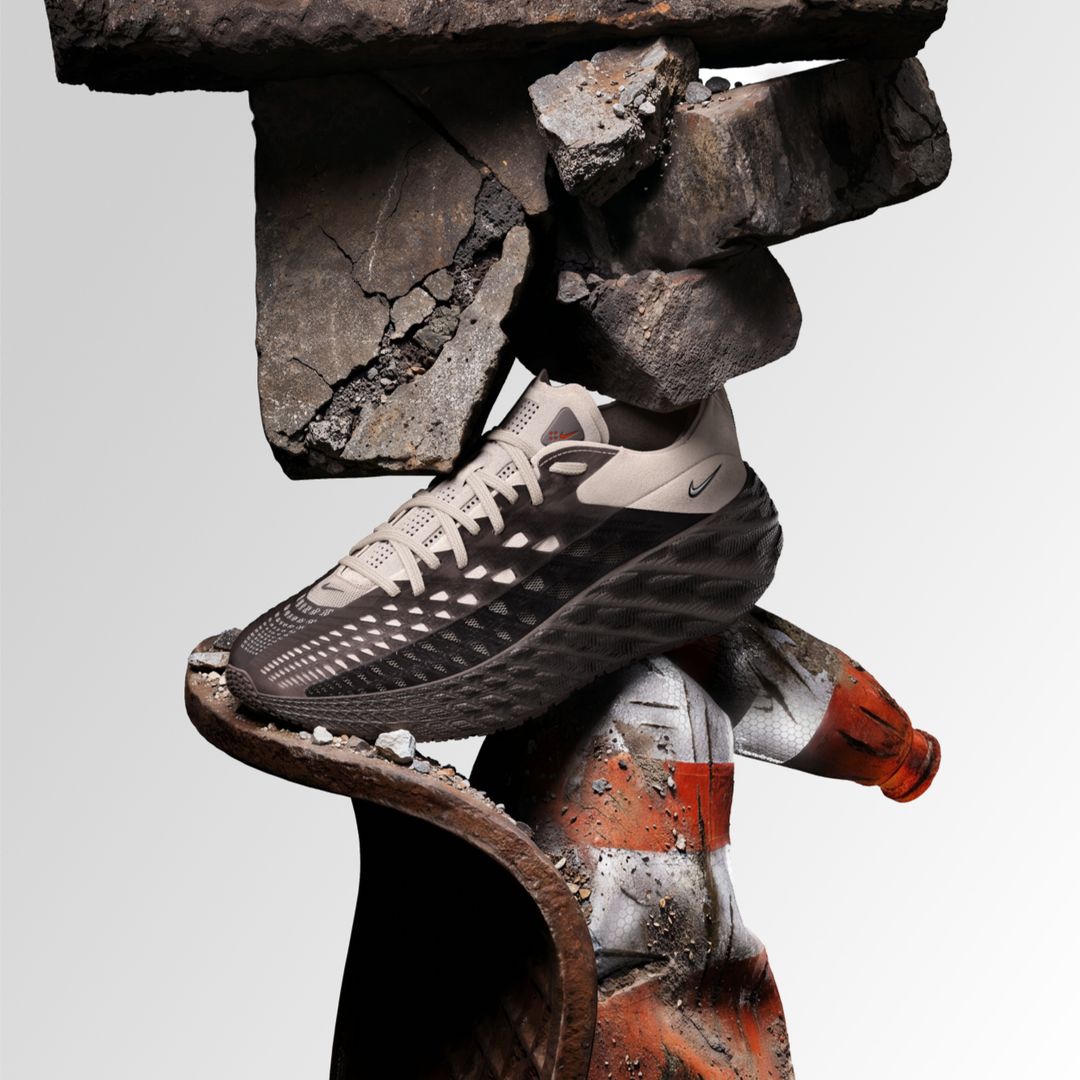
A promotional still featuring Nike’s Ava Edge.
Despite his foray into advertising, Mok never left his game art roots. From late 2024 to early 2025, he contributed hard-surface work to Call of Duty: Black Ops 6, a franchise with cumulative sales exceeding 400 million units, modelling various weapon attachments for the game's post-launch content. That same spring, he brought a similar real-time sensibility to a different platform through Black Math, the Boston-based design studio behind a new onboarding environment for Meta's Quest VR platform, where he served as the hard-surface specialist helping shape the project's visual identity.

An Instagram post for Call of Duty: Black Ops 6 - Season 3.
The two projects sit in different corners of the industry, yet they share the same connective tissue that first pulled Mok into 3D: treating virtual space as a storytelling medium. It traces back to his fine arts and undergraduate training, and continues to run alongside his advertising work rather than being left behind by it.

A still from a new onboarding environment created by Black Math for Meta’s Horizons VR platform.
Looking back, Mok's path doesn't read like a series of separate careers so much as one instinct, sharpened again and again in different rooms. Fine arts gave him an eye for form. A game art degree taught him to work with restraint. A pandemic-era job showed him his skills could apply beyond games, and a visual effects master's pushed his sense of realism further still. Everything since — the footwear, the product designs, the real-time worlds — has been that same principle, applied through The Mokintosh to whatever challenge came next. If there's a throughline, it's the one he'd already found before any of it had a name: treating what he builds, virtual or physical, as a vessel for telling a story, and as a way to further hone his craft. May those things never change.