
2026-03-26
Emma Fitzgerald
Design Dispatch, New York

As digital products become increasingly experience-driven, designers are rethinking interaction beyond functionality.
For Yi-Hsing “Kayla” Chen, play is not an aesthetic layer but a design strategy, one that structures how users engage with systems, information, and even constraints.
From interactive installations to digital products, Chen’s work explores how playfulness can transform complex or uncomfortable experiences into something engaging, intuitive, and meaningful. Her trajectory reflects a broader shift in UX design, where interaction is no longer just about usability, but about shaping perception and behavior.
Chen began exploring experience design during her MFA studies in Design & Technology at Parsons School of Design in 2021. The program encouraged students to define their own problems and develop creative systems in response, an approach that positioned design as a form of authorship rather than execution.
One of her earliest projects was inspired by a friend who had just completed a 14-day pandemic quarantine. Rather than focusing on the restrictions of isolation, Chen reframed the challenge: how could the experience itself be redesigned?
She developed an interactive postcard kit, where each day corresponded to a new card featuring a quote, a hand-drawn illustration, and a QR code linking to a digital activity. These activities ranged from meditation and journaling to small creative prompts such as doodling or calling a friend.
The system functioned both as a countdown and as a guided experience, structuring time through interaction. By introducing small moments of discovery, Chen transformed a period typically associated with monotony into one of reflection and engagement.
This approach reflects a broader UX principle: constraints can be redesigned as interactive systems, shifting user perception from limitation to participation.

Chen’s interest in play predates her formal design training. Growing up, she frequently created small games and social systems, exploring how rules, constraints, and rewards could shape behavior.
During her graduate studies, this instinct evolved into a more structured design methodology. In the project, Story of Food, Chen created an interactive installation centered on food and cultural identity. Users interacted with a physical hotpot model using chopsticks, triggering projected video content that explored layered meanings embedded in everyday meals.
By translating abstract concepts—identity, memory, migration—into tangible interactions, the project made complex narratives more approachable. Users were not asked to interpret content passively; they were invited to engage through action.
Playfulness here operates as an accessibility tool. It lowers cognitive and emotional barriers, allowing users to enter experiences that might otherwise feel distant or overly conceptual.
This demonstrates how physical interaction can serve as an entry point to complex cultural narratives.
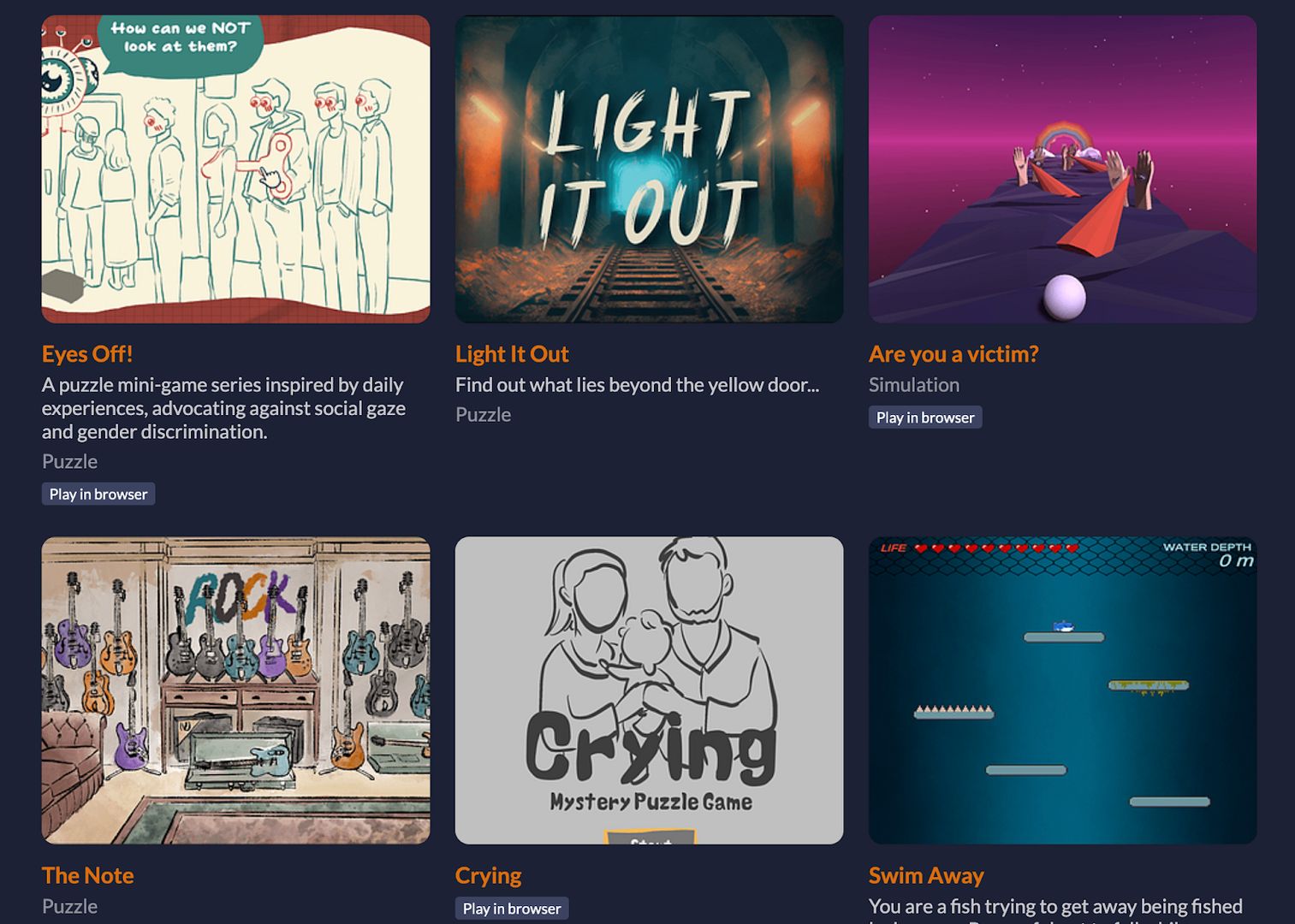
In the second year of her MFA, Chen began experimenting with game design—a shift that significantly shaped her approach to UX.
Although she did not come from a traditional gaming background, she found that games provided a structured framework for interaction design, combining systems, feedback, and narrative.
“Games require clarity in a way other mediums don’t,” she notes. “Players need to understand what they can do, how to do it, and why it matters almost instantly.”
Through rapid prototyping of small games, Chen developed a deeper understanding of user flow, feedback systems, and interaction logic. She explored how visual cues guide behavior, how mechanics communicate meaning, and how reward systems sustain engagement.
This phase highlights a key insight increasingly relevant in product design: user experience is not only about usability, but about motivation. Systems must not only function, they must invite action.
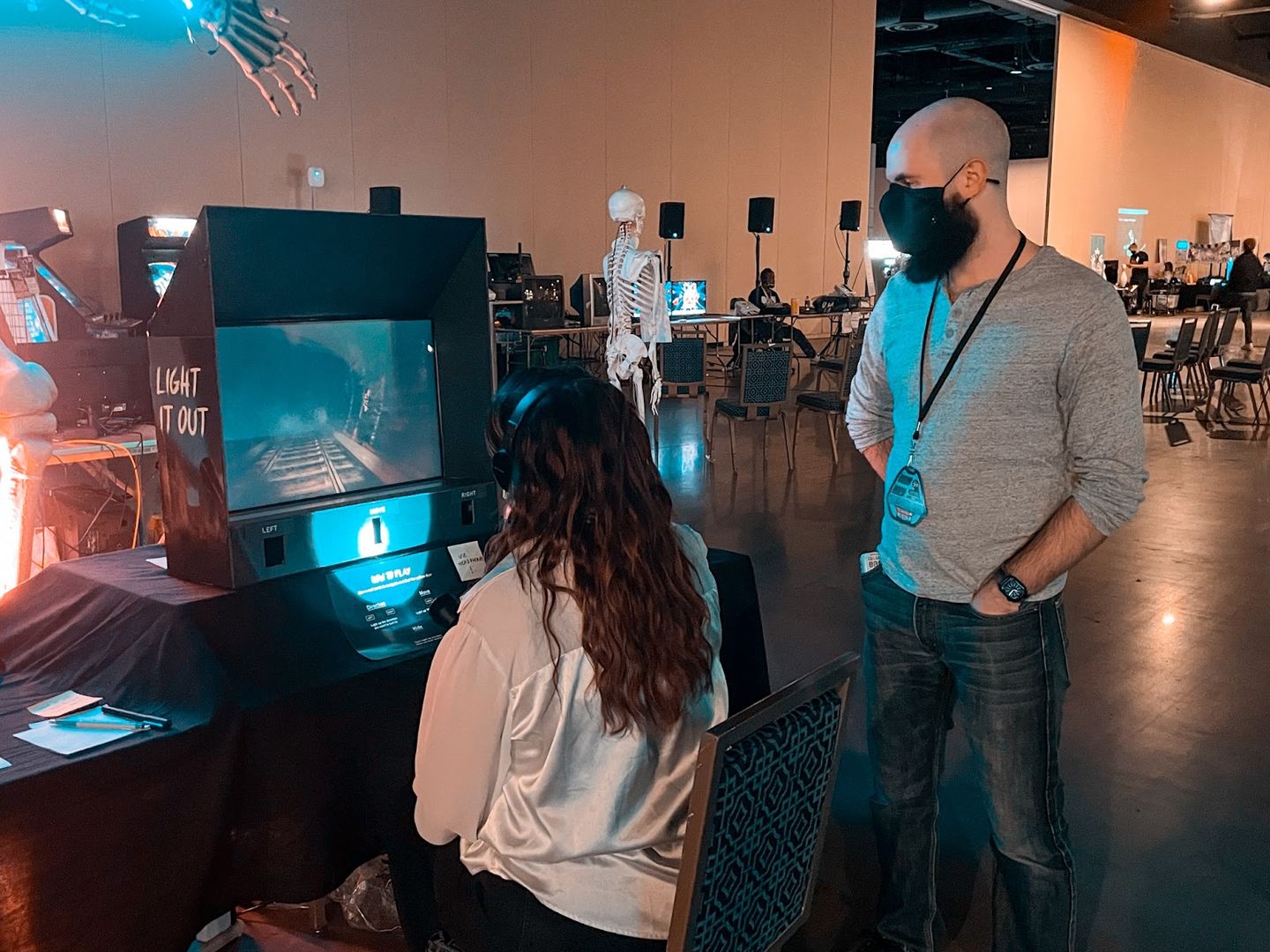
Chen’s project Light It Out expands her exploration of user experience through alternative forms of interaction design.
Developed as an indie arcade experience, the game replaces conventional controls with a physical light torch, which players use to navigate through a maze. By shifting away from button-based input, the project introduces a more embodied and exploratory form of interaction.
Instead of relying on familiar interface patterns, Light It Out encourages players to search, discover, and orient themselves through light. Limited visibility and indirect control create a sense of uncertainty, requiring players to actively interpret their environment and adjust their actions in real time.
This approach highlights how interaction design can shape user behavior and perception. Rather than guiding users through explicit instructions, the experience relies on curiosity and experimentation to drive engagement.
By moving from passive input to physical involvement, Chen explores how alternative interfaces can deepen immersion while remaining intuitive. The project was selected for exhibition at MAGFest 2023, where players engaged with the installation in a public arcade setting.
This work reflects a broader direction in UX and game design, where designers move beyond conventional interface patterns to explore how interaction itself can redefine the user experience.
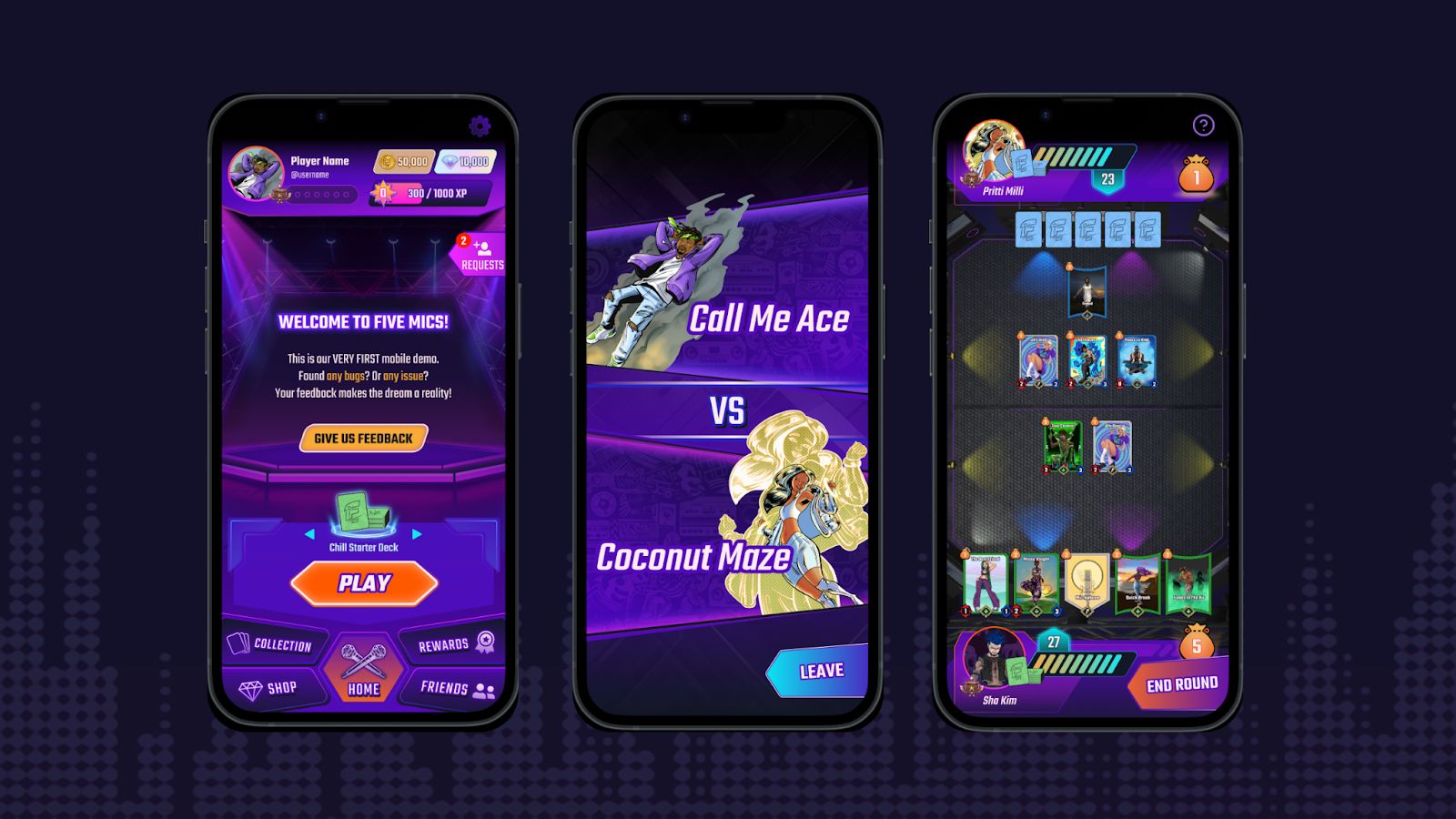
After graduating, Chen joined Five Mics Studios, founded by Call Me Ace, as a UI/UX Game Designer, applying her experience-driven approach to a live product environment.
Originally developed as a physical trading card game, Five Mics: The Hip-hop Trading Card Game was expanding into a digital simulator. Chen led the design of its interface and interaction systems, translating tactile gameplay into a digital experience.
Her work reflects a growing challenge in the industry: how to translate physical systems into intuitive digital experiences without losing clarity or engagement.
Rather than directly replicating mechanics, Chen focused on clarity, pacing, and feedback, ensuring that players could understand and navigate the system with minimal friction.
One key area of her work was onboarding. She designed a structured tutorial system that introduces mechanics progressively, using controlled interactions and narrative framing to guide players.
The result demonstrates how experience design principles can directly impact product outcomes. By aligning learning with engagement, the system not only improves usability but also increases player retention.
Working in a startup environment required Chen to adapt her design process to production realities.
Initially focused on visual refinement, she soon recognized that design value depends on implementation. If interaction systems are not functional, visual polish becomes irrelevant.
“If the system doesn’t work, the design doesn’t exist,” she notes.
She shifted toward a workflow that prioritizes rough, functional prototypes before refinement. This allows teams to test interactions earlier, identify issues, and iterate more efficiently.
This reflects a broader industry shift toward iterative design processes, where speed of testing and feedback loops outweigh the pursuit of early perfection.
Chen’s work also illustrates the expanding scope of product designers in technical environments.
Beyond interface design, she contributed to implementation by building interaction systems in Unity and exploring front-end development tools. This hybrid approach enabled faster prototyping and more direct collaboration with engineering teams.
As tools and workflows evolve, the boundary between design and development continues to blur. Designers are increasingly expected to understand not only how systems should look, but how they function and behave.
This shift positions designers as system thinkers who are responsible for shaping both experience and structure.
Across projects and contexts, Chen’s work consistently returns to play—not as entertainment, but as a method for engaging with complexity.
Playfulness introduces curiosity, reduces friction, and encourages exploration. It allows users to interact with unfamiliar systems, reflect on personal experiences, and navigate abstract ideas through concrete actions.
In an industry often focused on efficiency and optimization, this approach offers an alternative perspective: that meaningful user experiences are not only usable, but engaging and reflective.
As digital products continue to integrate into everyday life, the role of experience design is expanding. Designers are no longer just organizing information, they are shaping how people perceive, interact with, and understand the world around them.
For Chen, the goal is not to create final solutions, but evolving systems—designs that continue to adapt, respond, and spark connections over time.