
2025-12-15
Emma Fitzgerald
Design Dispatch, New York
NEW YORK — When Korean photographer Saemi arrived in New York in 2024, the city felt less like a destination than a provocation. Its vastness, she said, was startling. “Seoul is dense, and very concentrated. New York felt expansive. It made me think differently, endlessly.”
Saemi began spending hours walking Bushwick turning her daily routes into an informal studio. Those walks quietly informed her previous exhibition, Swan Lake Act III - The Corollary, which opened at the SVA gallery. That exhibition confronted what she describes as the “emptiness and grandiosity projected onto women and queer bodies in classical art.” The work drew in part from the sensibility of Brooklyn and was grounded in Saemi’s experience as a queer Korean woman navigating entrenched artistic traditions.
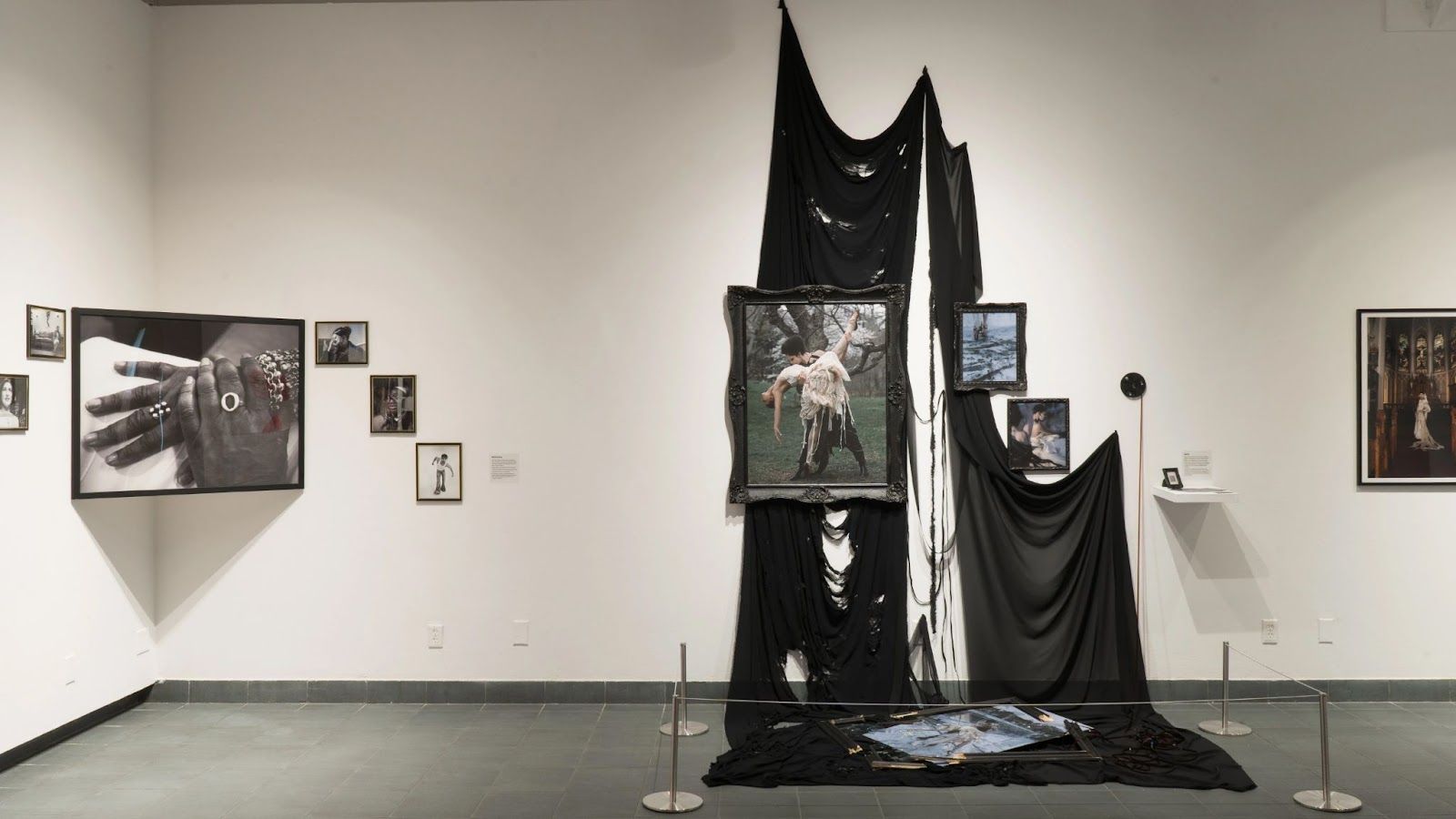
Her latest installation returns to that tension with greater insistence. Presented at the 2025 SVA Fashion Photography Exhibition, Swan Lake Act III - The Corollary takes a canonical story and refuses to retell it politely. Through large-scale photographs, sculptural material, and video, Saemi doesn’t reinterpret Tchaikovsky’s Swan Lake so much as interrogate its authority. She renders its classical language colder, more lyrical, and unmistakably queer.
“Why should a prince who can’t even recognize the person he claims to love be at the center of the story?” Saemi asked. The line operates like a thesis. Rather than reaffirm the familiar binary between Odette and Odile, purity versus seduction, Saemi collapses the divide. Her swans are not adversaries but reflections, equally confined by the narrative that claims to exalt them.
“The original depends on artificial binaries,” she said. “Odette as innocence, Odile as deception. Both serve the same system of control.” Saemi aims to recover LGBTQ+ perspectives that classical ballet has historically excluded, not by adding representation but by dismantling the frame that obscured it. Her series includes two large prints, two smaller ones, and a video. Costumes appear softened yet violated. Beauty arrives fractured. Saemi’s ballet is not staged- it is deconstructed.
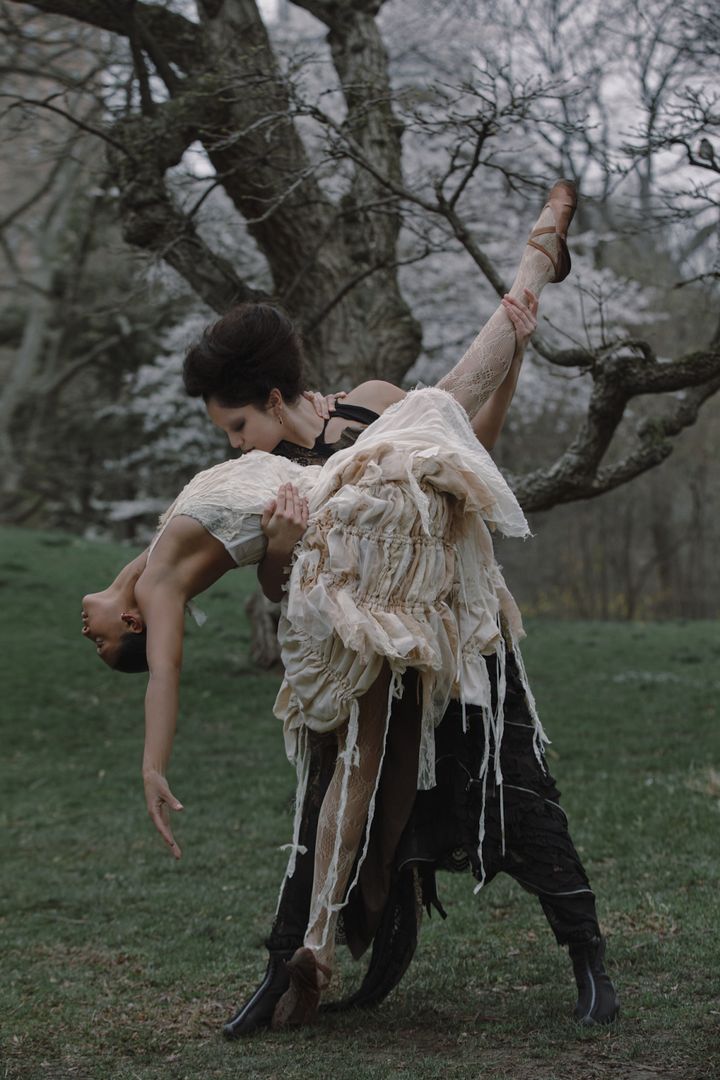
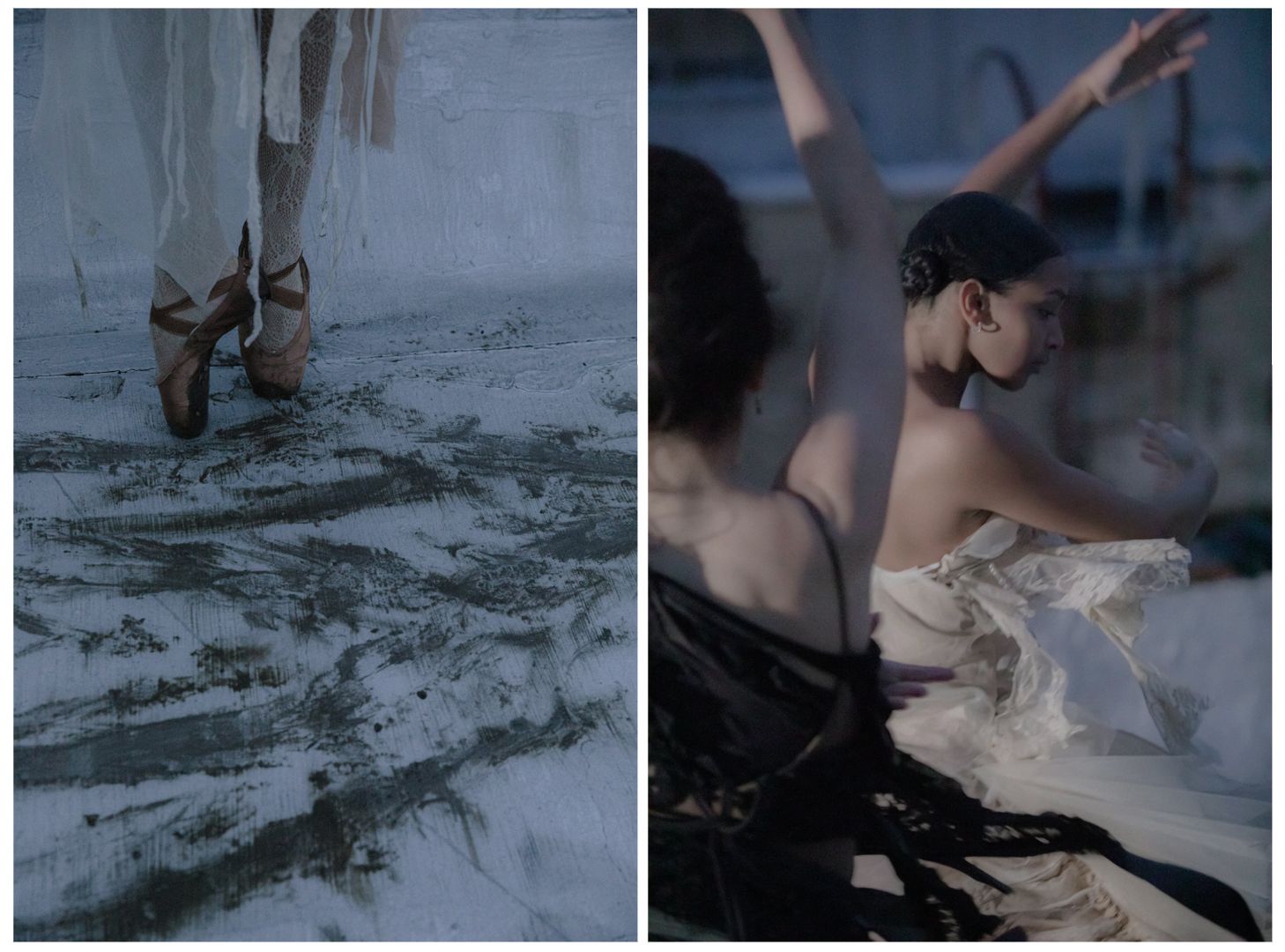
Saemi describes her visual approach as “romantic deconstruction,” a phrase that captures the push and pull in her work: the sentimental materials of ballet undone by the violence of scrutiny. Corsets, lace, and tulle appear not adorned but ruptured, stitched asymmetrically or left with raw seams. The palette feels eroded, earthy tones more excavated than designed. In one image, a dancer bends backward into another woman’s hold, her pointe shoes caked with mud and visibly crushed. In another, two figures stand on a rooftop at dusk, lifting their arms in a quiet, synchronized gesture, a choreography of refusal.
“A body cannot simply perform beauty,” Saemi said. “It has to rupture it.”
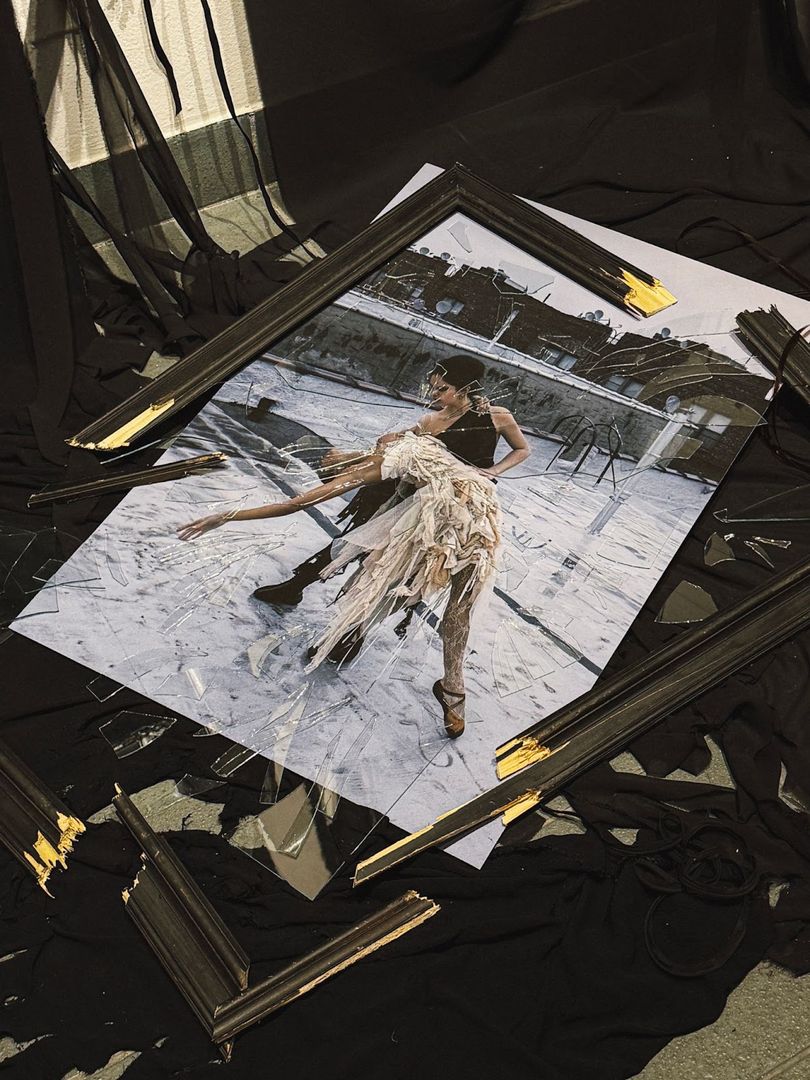
Fragments extend into the installation. Black fabric hangs in shredded strips from the ceiling, like shed skin. A photograph lies face up inside a broken frame, its glass splintered around it. Each damaged object functions as a provocation.
“When frames break, when heroines refuse their script, when binaries collapse,” Saemi said, “there is space for something new.”
Saemi’s perspective is informed by movement, geographic, cultural, and personal. She received a BFA in Photography and Video from Kyungil University in Korea before relocating to New York for her MPS at School of Visual Arts. She works between editorial and fine art, using fashion not as spectacle but as critique. Themes of migration, gender, and inherited aesthetics recur throughout her practice.
Her casting mirrored that ethos. She invited queer, and BIPOC dancers not to pose but to collaborate.
The Corollary is ultimately less an act of rebellion than a rewriting, a new conclusion to a familiar myth. In a moment when classical forms are being reevaluated, Saemi proposes that ballet, and by extension fashion photography, need not simply modernize. They can be unbound. “I wasn’t interested in reenacting Swan Lake,” she said. “I wanted to reflect our own stories.”


